
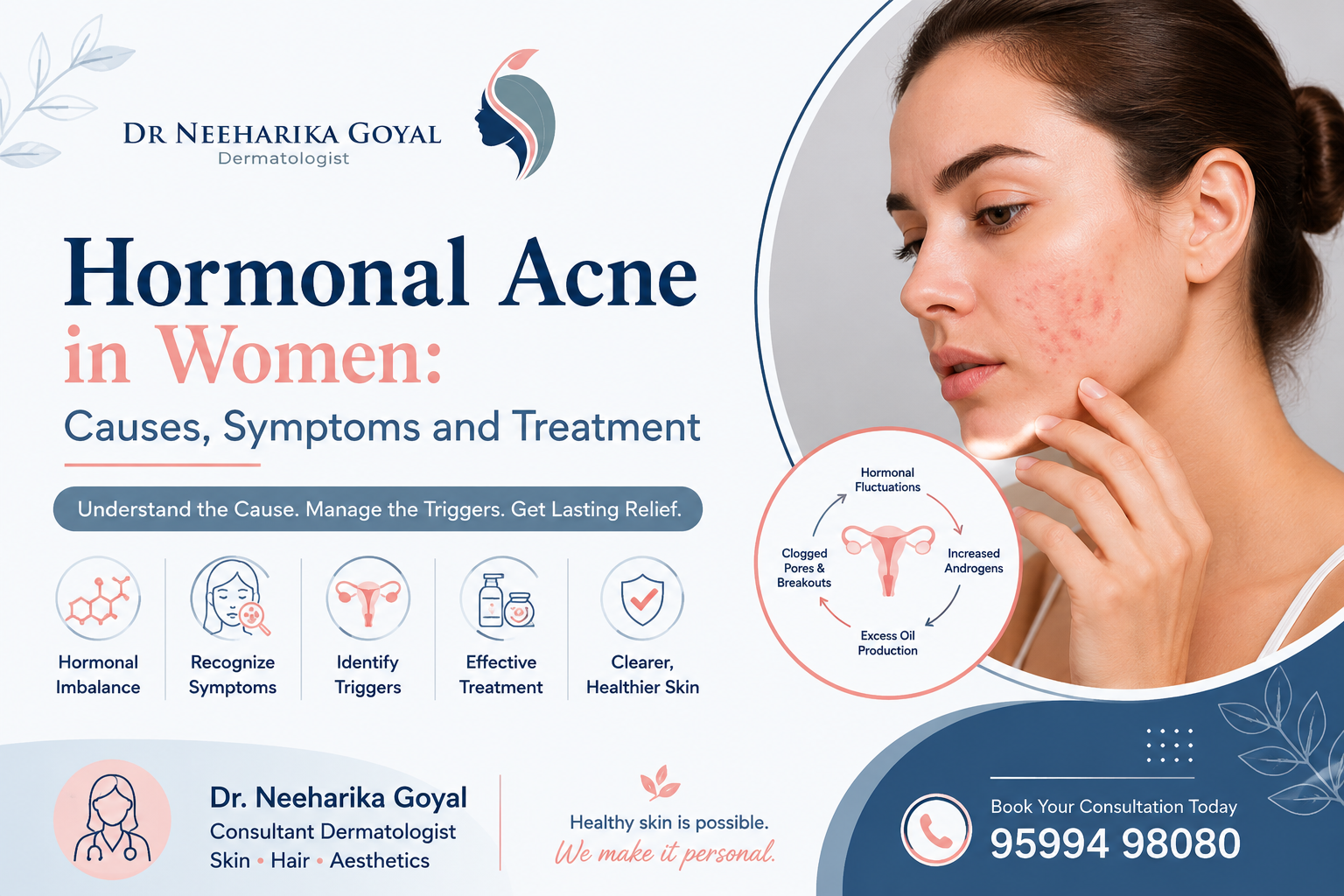
Acne is often associated with teenage years, but many women continue to experience breakouts well into adulthood. One common reason is hormonal acne, which can develop during different stages of life due to changes in hormone levels. These breakouts may appear repeatedly, particularly around the chin, jawline, lower cheeks, and sometimes the neck.
Hormonal acne in women can be frustrating because pimples may disappear temporarily and return during certain phases of the menstrual cycle. Some women experience occasional breakouts, while others deal with persistent acne that may leave dark spots or scars.
Although hormonal fluctuations are a common contributor, they are not the only cause of adult acne. Factors such as excess oil production, genetics, stress, certain medications, and underlying hormonal conditions can also play a role.
Understanding the causes and symptoms of hormonal acne can help women identify suitable treatment options and manage recurring breakouts more effectively.
What Is Hormonal Acne?
Hormonal acne is a type of acne influenced by changes in hormone levels, particularly androgens. These hormones can stimulate the sebaceous glands to produce excess sebum, or natural skin oil.
When excess oil combines with dead skin cells inside hair follicles, pores can become blocked. This creates an environment where acne-associated bacteria and inflammation contribute to the development of pimples.
Hormonal acne commonly affects adult women and may become more noticeable during:
- Puberty
- Menstrual cycles
- Pregnancy
- Postpartum hormonal changes
- Perimenopause and menopause
- Conditions associated with hormonal imbalance, such as polycystic ovary syndrome (PCOS)
Hormonal acne can range from mild pimples to deeper, painful inflammatory lesions. Its appearance and severity vary from person to person.
What Causes Hormonal Acne in Women?
Several factors can influence hormone-related breakouts. Understanding these causes is important for selecting an appropriate treatment approach.
1. Hormonal Fluctuations During the Menstrual Cycle
Many women notice that acne becomes worse just before or during their periods.
During different phases of the menstrual cycle, hormone levels naturally fluctuate. These changes can influence sebum production and contribute to clogged pores.
Women may experience recurring pimples around the chin, jawline, and lower cheeks. These breakouts may improve after menstruation but return during the next cycle.
2. Polycystic Ovary Syndrome (PCOS)
PCOS is a hormonal condition that may be associated with increased androgen levels. Higher androgen activity can stimulate oil production and contribute to persistent acne.
Women with PCOS may experience other symptoms, including:
- Irregular or missed menstrual periods
- Increased facial or body hair
- Hair thinning on the scalp
- Weight changes in some individuals
- Persistent acne, particularly around the lower face
Not every woman with acne has PCOS. However, acne accompanied by irregular periods or increased facial hair may require medical evaluation.
3. Pregnancy and Postpartum Hormonal Changes
Hormonal changes during pregnancy can affect the skin in different ways. Some women notice increased acne, while others experience clearer skin.
After childbirth, changing hormone levels may also contribute to breakouts.
Treatment during pregnancy and breastfeeding requires additional care because certain acne medications are not suitable during these periods. A dermatologist can recommend appropriate options.
4. Perimenopause and Menopause
Hormonal changes during perimenopause and menopause can influence skin oil production.
As estrogen levels decline, the balance between estrogen and androgens may change. Some women experience new or recurring acne during this stage of life.
Adult acne during this period may appear around the chin and jawline and can sometimes occur alongside skin dryness and sensitivity.
5. Stress and Hormonal Changes
Stress may aggravate existing acne in some women.
The body’s stress response involves hormones such as cortisol, which may influence inflammation and skin activity. Stress can also affect sleep and daily skincare habits.
Managing stress and maintaining healthy lifestyle routines may support overall skin health, although these measures alone may not be enough to control hormonal acne.
6. Excess Sebum Production
Androgens stimulate sebaceous glands, which produce the natural oils that protect the skin.
When oil production becomes excessive, sebum can combine with dead skin cells and contribute to blocked pores.
This can lead to blackheads, whiteheads, and inflammatory pimples.
7. Certain Medications and Skincare Products
Some medications may contribute to acne or acne like breakouts in certain individuals.
Additionally, heavy skincare products, unsuitable cosmetics, and hair products that come into contact with facial skin may worsen clogged pores.
Choosing products appropriate for acne prone skin can help reduce product-related breakouts.
Common Symptoms of Hormonal Acne in Women
Hormonal acne can have certain recognizable patterns, although its appearance alone cannot confirm a hormonal cause.
Common symptoms include:
1. Breakouts Around the Chin and Jawline
One of the commonly reported patterns of adult hormonal acne is repeated breakouts around the chin, jawline, and lower cheeks.
2. Deep and Painful Pimples
Hormonal acne may involve deeper inflammatory lesions, including tender nodules and cyst-like bumps.
These lesions can remain under the skin for longer periods and may be more likely to cause scarring.
3. Recurring Breakouts Before Periods
Some women notice that pimples appear or become more inflamed in the days leading up to menstruation.
This pattern may repeat over several menstrual cycles.
4. Oily Skin
Increased sebum production may make the skin appear shiny or greasy, particularly around the forehead, nose, and chin.
5. Acne Marks and Scars
Repeated inflammatory breakouts can leave dark spots, known as post inflammatory hyperpigmentation, or permanent acne scars.
Picking or squeezing pimples can increase the risk of these complications.
Hormonal Acne vs Regular Acne: What Is the Difference?
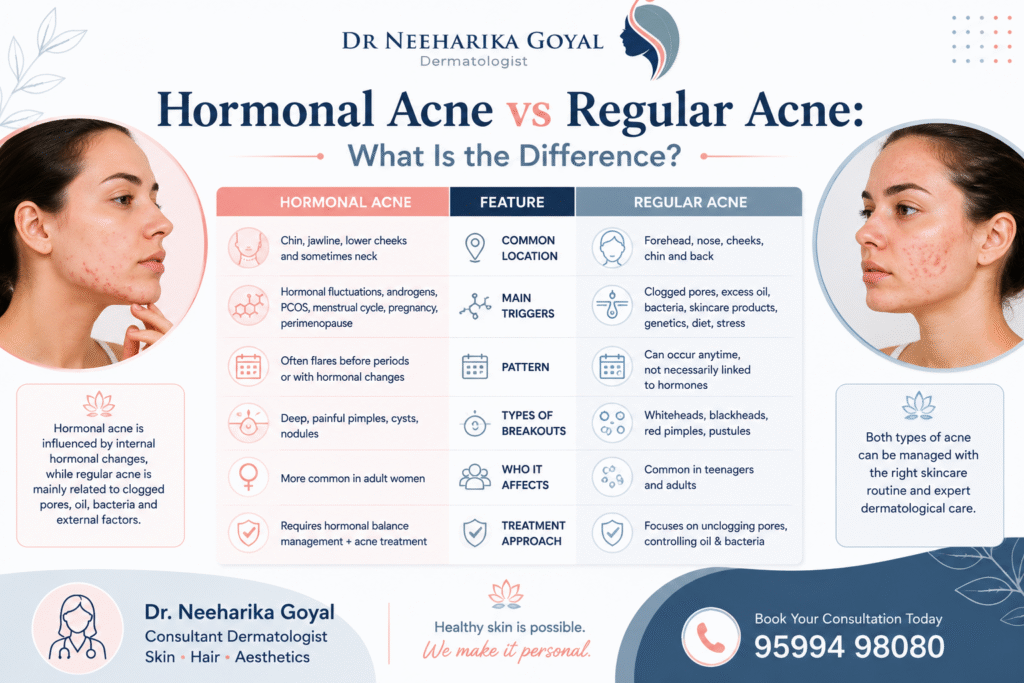
Both hormonal and non hormonal acne develop through similar processes involving clogged pores, excess sebum, bacteria, and inflammation. However, their triggers and patterns may differ.
| Feature | Hormonal Acne | Other Acne |
|---|---|---|
| Common location | Chin, jawline, lower cheeks | Forehead, nose, cheeks, chin |
| Common triggers | Hormonal fluctuations and androgen activity | Clogged pores, skincare products, genetics and other factors |
| Breakout pattern | May recur around menstrual cycles | May occur without a noticeable cycle-related pattern |
| Appearance | May include deep, painful pimples | May include blackheads, whiteheads and inflammatory pimples |
| Age group | Common in adult women | Can affect teenagers and adults |
| Treatment | May include topical and hormonal treatments | Depends on acne type and severity |
These differences are general patterns rather than strict diagnostic rules. A dermatologist can assess the type of acne and identify possible contributing factors.
How Is Hormonal Acne Diagnosed?
A dermatologist usually begins by examining the skin and understanding the patient’s acne history.
The evaluation may include:
1. Skin Examination: The dermatologist assesses the location, appearance, severity, and type of acne lesions.
2. Medical History: Questions may cover the duration of acne, menstrual cycle patterns, previous treatments, medications, and skincare habits.
3. Hormonal Assessment: If symptoms suggest an underlying hormonal condition, further medical evaluation may be recommended.
4. Blood Tests: Hormone testing is not necessary for every woman with acne. However, selected blood tests may be advised when there are signs of androgen excess or suspected PCOS.
A proper assessment helps distinguish ordinary adult acne from acne associated with an underlying hormonal condition.
Effective Treatment Options for Hormonal Acne in Women
The treatment of hormonal acne depends on its severity, skin type, medical history, and whether an underlying hormonal condition is present.
A dermatologist may recommend one or a combination of the following options.
1. Topical Retinoids
Topical retinoids, such as adapalene, help regulate skin cell turnover and prevent clogged pores.
They are commonly used to manage blackheads, whiteheads, and inflammatory acne. They may also be recommended as maintenance treatment to reduce future breakouts.
Some individuals experience dryness, redness, or irritation when starting retinoids. These products should be introduced according to medical advice.
Topical retinoids should generally be avoided during pregnancy.
2. Benzoyl Peroxide
Benzoyl peroxide helps reduce acne-associated bacteria and inflammation.
It is commonly recommended for inflammatory acne and may be used alongside other topical treatments.
Starting with an appropriate concentration can help minimize irritation. Benzoyl peroxide can also bleach fabrics, so care is needed when using it.
3. Salicylic Acid
Salicylic acid is a beta-hydroxy acid that helps exfoliate dead skin cells and reduce pore blockage.
It may be helpful for women experiencing blackheads, whiteheads, and mild acne.
However, excessive use can cause dryness and irritation, particularly in sensitive skin.
4. Azelaic Acid
Azelaic acid has anti-inflammatory and comedolytic properties that can help manage acne.
It may also improve dark spots left behind after pimples heal, making it a useful option for women experiencing both acne and post-acne pigmentation.
5. Hormonal Treatment
For selected women with persistent or hormonally influenced acne, dermatologists may consider hormonal treatment.
Options can include:
- Combined oral contraceptive pills: Certain formulations can help reduce androgen-related effects on the sebaceous glands. They are suitable only for selected patients after assessing medical history and potential risks.
- Spironolactone: This medication reduces the effects of androgens and may help manage persistent acne in selected women.
These treatments require medical supervision. They are not suitable for everyone, and pregnancy-related precautions are particularly important with spironolactone.
6. Oral Antibiotics
For moderate to severe inflammatory acne, oral antibiotics may be prescribed for a limited period.
They help reduce acne-associated bacteria and inflammation. They are generally combined with suitable topical treatments, such as benzoyl peroxide, to reduce antibiotic resistance.
Antibiotics are not a long-term standalone solution for hormonal acne.
7. Isotretinoin
For severe, nodular, scarring, or treatment-resistant acne, a dermatologist may consider oral isotretinoin.
It reduces sebum production and helps control severe acne.
Isotretinoin requires strict medical supervision, including appropriate monitoring and pregnancy-prevention measures because it can cause severe birth defects.
8. Chemical Peels
Selected chemical peels may be recommended as an additional treatment for certain types of acne and post-acne marks.
Depending on the skin condition, a dermatologist may use ingredients such as salicylic acid or glycolic acid.
Chemical peels are not a replacement for treating the underlying causes of hormonal acne. Their suitability depends on skin type, acne severity, and sensitivity.
Skincare Routine for Women With Hormonal Acne
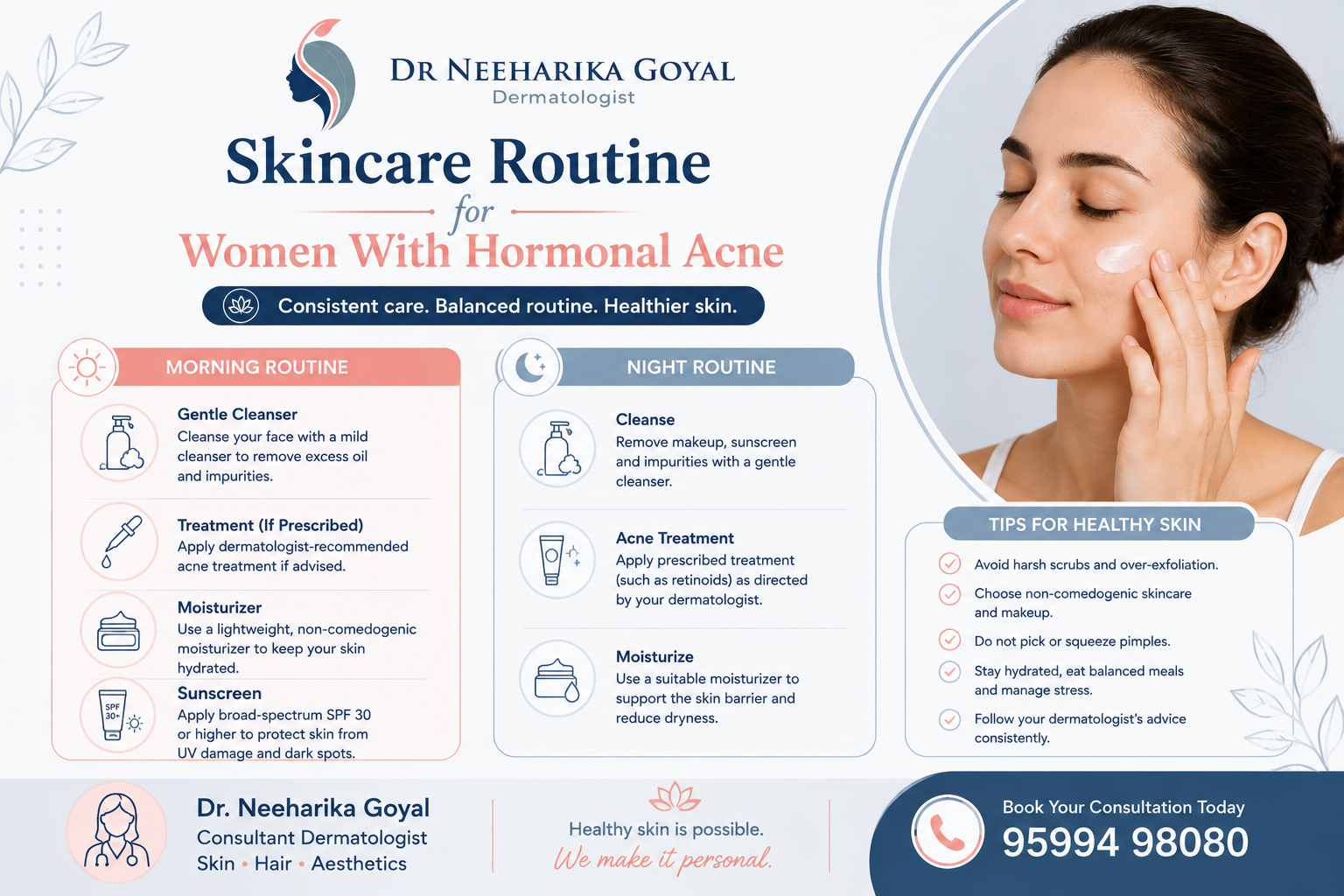
A consistent skincare routine can support medical treatment and help reduce irritation.
Morning Routine
- Gentle Cleanser: Use a mild cleanser to remove excess oil and impurities.
- Suitable Treatment: Apply a dermatologist-recommended acne product if advised.
- Moisturizer: Choose a lightweight, non-comedogenic moisturizer.
- Sunscreen: Apply broad-spectrum SPF 30 or higher sunscreen to protect the skin from UV exposure and help prevent post-acne marks from becoming darker.
Night Routine
- Cleanse: Remove makeup, sunscreen, and accumulated impurities.
- Acne Treatment: Apply prescribed products, such as a topical retinoid, according to medical advice.
- Moisturize: Use a suitable moisturizer to support the skin barrier.
Avoid introducing several active ingredients simultaneously. A simple routine that suits your skin is often easier to maintain.
Lifestyle Tips to Help Manage Hormonal Acne
Lifestyle changes cannot replace medical treatment, but they may help support overall skin health.
- Maintain a balanced diet with vegetables, fruits, whole grains, and adequate protein.
- Consider reducing frequent consumption of high-glycaemic foods if they appear to worsen your breakouts.
- Observe whether certain dairy products are associated with your acne.
- Maintain regular sleep habits.
- Practice stress management techniques such as walking, yoga, or meditation.
- Avoid frequently touching, picking, or squeezing pimples.
- Clean makeup brushes regularly.
- Choose non comedogenic skincare and cosmetic products.
- Follow your prescribed acne treatment consistently.
There is no single diet or lifestyle change that works for everyone with hormonal acne. Individual triggers and treatment needs can vary.
When Should You See a Dermatologist for Hormonal Acne?
Occasional pimples may not require extensive treatment, but persistent or painful acne deserves professional attention.
Consider consulting a dermatologist if:
- Acne repeatedly appears around the chin and jawline.
- You experience deep, painful, or inflamed pimples.
- Breakouts become worse before every menstrual cycle.
- Acne continues despite using over the counter skincare products.
- Pimples are leaving dark marks or permanent scars.
- You experience irregular periods along with persistent acne.
- You notice increased facial hair or unexplained hair thinning.
- Acne is affecting your confidence or emotional well-being.
Early dermatological assessment can help identify possible hormonal factors and reduce the risk of long-term acne scarring.
Conclusion
Hormonal acne in women can be challenging to manage, particularly when breakouts continue to return despite regular skincare. Hormonal fluctuations, PCOS, menstrual cycle changes, excess oil production, and other factors may contribute to recurring acne.
The most effective approach is to identify the possible triggers and choose a treatment plan based on individual skin concerns and medical history. Topical medications, hormonal treatments, oral medications, and selected dermatological procedures may help manage different types of acne.
If you are experiencing persistent breakouts, deep pimples, or acne accompanied by menstrual irregularities, professional evaluation can help determine the appropriate next steps.
Frequently Asked Questions
1. What is the main cause of hormonal acne in women?
Hormonal fluctuations, particularly changes in androgen activity, are common contributors. These hormones can stimulate excess oil production, increasing the likelihood of clogged pores and inflammatory acne.
2. Where does hormonal acne usually appear?
Hormonal acne commonly appears around the chin, jawline, and lower cheeks. However, it can also affect other areas of the face, chest, and back.
3. Can PCOS cause hormonal acne?
Yes. PCOS may cause increased androgen activity, which can stimulate oil production and contribute to persistent acne. Women experiencing acne along with irregular periods or increased facial hair should consider medical evaluation.
4. Does hormonal acne go away on its own?
Mild hormonal acne may improve as hormone levels fluctuate, but persistent acne may require treatment. Appropriate skincare and dermatologist-recommended medication can help control recurring breakouts.
5. How long does hormonal acne treatment take?
Treatment results vary depending on acne severity and the medication used. Many acne treatments require approximately 6–8 weeks or longer to show noticeable improvement. Consistent treatment and follow-up are important.
About Dr. Neeharika Goyal
Dr. Neeharika Goyal is a Consultant Dermatologist at Svastam Wellness Clinic, Ashok Vihar, New Delhi. She focuses on personalized dermatological care for skin concerns, including acne, hormonal acne, pigmentation, acne scars, and other skin conditions.
With an emphasis on understanding individual skin concerns and selecting suitable treatment options, patients receive guidance tailored to their skin type and treatment needs.
If recurring acne is affecting your skin or confidence, consulting a dermatologist can help you take an informed step towards healthier skin.