
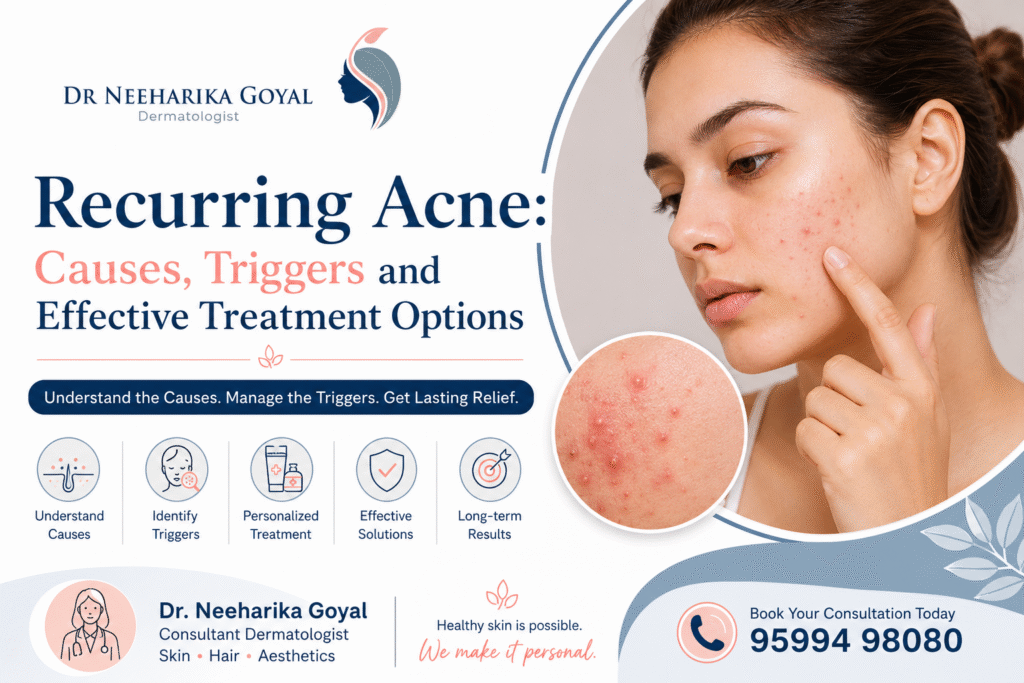
Acne can be frustrating, especially when pimples disappear after treatment but start appearing again after a few weeks or months. Many people experience recurring breakouts despite following a skincare routine or using different acne products. While occasional pimples are common, repeated breakouts may indicate that the underlying causes of acne have not been properly addressed.
Recurring acne can affect people of different ages and skin types. It may appear on the face, forehead, chin, jawline, chest, or back. Hormonal fluctuations, excess oil production, clogged pores, certain skincare products, stress, and other factors can contribute to repeated breakouts.
Recurring acne occurs when pores repeatedly become clogged with excess oil, dead skin cells, and bacteria, driving ongoing cycles of inflammation. Effective long-term control relies on identifying underlying triggers, maintaining a consistent daily skincare routine, and using targeted topical or prescription medications.
What Is Recurring Acne?
Recurring acne refers to repeated breakouts that continue to develop even after existing pimples have improved or cleared. It may involve blackheads, whiteheads, inflammatory pimples, or deeper and more painful acne lesions.
Some people experience breakouts in the same areas repeatedly, particularly around the chin and jawline. Others notice acne appearing in different areas of the face or body.
Recurring acne is not necessarily a sign of poor hygiene or improper cleansing. It often develops because several factors continue to influence the skin’s oil production, pore blockage, inflammation, and hormonal activity.
Why Does Acne Keep Coming Back?
Acne develops when hair follicles become clogged with excess sebum (natural skin oil), dead skin cells, and other debris. The activity of acne-associated bacteria and inflammation can further contribute to breakouts.
Even when visible pimples improve, the factors responsible for acne may remain active.
Here are some common reasons acne keeps returning.
1. Hormonal Fluctuations
Hormonal changes are one of the common contributors to recurring acne, particularly in adults.
Androgens, including testosterone, can stimulate the sebaceous glands to produce more oil. Excess sebum can increase the likelihood of clogged pores and inflammatory breakouts.
Hormonal acne may appear around the chin, jawline, and lower cheeks. Some women notice that breakouts become more frequent before or during menstruation.
Conditions such as polycystic ovary syndrome (PCOS) may also be associated with persistent acne, particularly when accompanied by irregular periods or increased facial hair.
2. Excess Oil Production
Sebum helps maintain skin hydration and protects the skin barrier. However, excessive oil production can contribute to clogged pores.
People with oily or acne prone skin may experience repeated blackheads, whiteheads, and inflammatory pimples.
Using harsh cleansers to remove all the oil is not a suitable solution. Over-cleansing can irritate the skin and compromise its natural barrier.
3. Clogged Pores and Dead Skin Cell Buildup
Skin naturally sheds dead cells, but when these cells accumulate inside hair follicles and mix with sebum, they can contribute to pore blockage.
This may lead to comedonal acne, including blackheads and whiteheads.
Inadequate or unsuitable skincare routines may also make it harder to manage this type of acne.
4. Incorrect Skincare Products
Certain skincare and cosmetic products may contribute to breakouts, particularly when they are too heavy or unsuitable for acne prone skin.
Common examples include:
- Heavy creams and oil based products that may clog pores.
- Makeup products that are not suitable for acne prone skin.
- Hair oils and styling products that come into contact with the forehead.
- Excessive use of exfoliating acids and physical scrubs.
- Multiple active ingredients used together without considering skin tolerance.
Choosing non-comedogenic products and following a simple, consistent skincare routine can help reduce product-related breakouts.
5. Stress and Lifestyle Factors
Stress does not directly cause every acne breakout, but it may worsen existing acne in some individuals.
Stress-related hormonal changes and inflammation may influence acne activity. Poor sleep and inconsistent lifestyle habits can also affect overall skin health.
Maintaining regular sleep patterns, managing stress, and following balanced daily habits may support acne management.
6. Stopping Acne Treatment Too Early
One common reason acne returns is discontinuing treatment as soon as the visible pimples disappear.
Acne treatment often requires consistent use over time. Although inflammation may improve within a few weeks, the tendency to develop clogged pores can continue.
Stopping prescribed medication too early may allow new breakouts to develop.
Dermatologists may recommend maintenance treatment even after acne has improved to reduce the chances of recurrence.
7. Underlying Medical or Medication-Related Factors
Persistent acne can sometimes be associated with hormonal conditions or certain medications.
For example, corticosteroids, some hormonal medications, and other drugs may contribute to acne-like breakouts in certain individuals.
If acne begins suddenly, becomes severe, or is accompanied by other symptoms, a medical evaluation can help identify possible contributing factors.
Common Triggers That Can Make Acne Worse
In addition to the underlying causes, certain everyday factors may trigger or aggravate acne.
Some common triggers include:
- Menstrual cycle changes: Hormonal fluctuations may increase oil production and contribute to breakouts.
- Heavy skincare products: Certain creams, sunscreens, and makeup products may contribute to clogged pores.
- Excessive exfoliation: Frequent scrubbing or overuse of active ingredients can irritate the skin.
- Touching or picking pimples: Repeated touching and squeezing can increase inflammation and the risk of acne marks and scars.
- Sweat and friction: Tight clothing, helmets, masks, and prolonged friction may aggravate acne in susceptible individuals.
- Certain dietary patterns: High-glycaemic foods and some dairy products may worsen acne in certain people, although dietary responses vary.
- Poor sleep and stress: These factors may influence inflammation and make existing acne harder to manage.
Identifying personal triggers is more useful than avoiding every possible acne-related factor unnecessarily.
Effective Treatment Options for Recurring Acne
The treatment of recurring acne depends on its type, severity, location, skin sensitivity, and possible underlying causes. A dermatologist can assess these factors and recommend an appropriate treatment plan.
Common treatment options include:
1. Topical Retinoids
Topical retinoids, such as adapalene, help regulate skin cell turnover and prevent clogged pores.
They are commonly used for comedonal acne and as part of long term acne management.
These products may initially cause dryness, redness, or irritation. They should be introduced according to medical advice. Topical retinoids should generally be avoided during pregnancy.
2. Benzoyl Peroxide
Benzoyl peroxide helps reduce acne associated bacteria and inflammation. It is commonly recommended for inflammatory acne, including red pimples and pustules.
It may be used alone or alongside other acne treatments, depending on the individual’s skin condition.
3. Salicylic Acid
Salicylic acid is a beta hydroxy acid (BHA) that helps exfoliate inside the pores and remove accumulated dead skin cells.
It may be useful for people experiencing blackheads, whiteheads, and mild clogged pore acne.
However, excessive use can cause dryness and irritation, particularly in sensitive skin.
4. Azelaic Acid
Azelaic acid has anti-inflammatory and comedolytic properties. It may help manage acne and improve post-acne dark marks.
It can be a useful option for individuals who experience both breakouts and pigmentation after acne.
5. Oral Medications
For moderate to severe or persistent acne, dermatologists may recommend oral medications.
Depending on the individual’s condition, treatment may include:
- Oral antibiotics for selected inflammatory acne cases, generally for a limited duration and alongside appropriate topical treatment.
- Hormonal treatments for selected women with hormonally influenced acne.
- Isotretinoin for certain cases of severe, scarring, or treatment-resistant acne, with strict medical supervision and pregnancy prevention precautions.
Oral medications should never be started without a dermatologist’s assessment.
6. Dermatological Procedures
Some individuals may benefit from professional procedures as part of a broader acne management plan.
Depending on the skin condition and treatment goals, a dermatologist may consider:
- Chemical peels to help manage clogged pores and certain types of acne.
- Selected procedures for specific acne related concerns.
- Procedures for acne scars after active acne has been brought under control.
Procedures are not suitable for everyone and should be selected according to the individual’s skin condition.
How to Prevent Acne From Coming Back
Preventing recurring acne requires consistency rather than frequently changing skincare products.
The following habits may help support clearer and healthier-looking skin:
- Cleanse gently: Wash your face twice daily using a mild cleanser suitable for your skin type.
- Use non-comedogenic products: Choose moisturizers, sunscreens, and makeup that are labelled non-comedogenic.
- Moisturize regularly: Even oily and acne prone skin needs appropriate hydration.
- Apply sunscreen: Use a broad-spectrum SPF 30 or higher sunscreen to protect the skin and reduce the worsening of post-acne pigmentation.
- Avoid picking pimples: Squeezing acne lesions can increase inflammation and the risk of scarring.
- Follow your treatment consistently: Continue prescribed maintenance treatment as advised by your dermatologist.
- Identify personal triggers: Observe whether particular products, hormonal changes, or lifestyle patterns coincide with breakouts.
- Avoid over-exfoliation: Excessive use of scrubs and active ingredients can irritate the skin.
A simple and consistent skincare routine is often more helpful than using too many products at once.
When Should You See a Dermatologist for Recurring Acne?
Occasional mild pimples may improve with suitable skincare, but repeated or persistent acne deserves professional attention.
Consider consulting a dermatologist if:
- Acne keeps returning despite regular skincare.
- You experience deep, painful, or inflamed pimples.
- Breakouts are leaving dark marks or permanent scars.
- Acne is affecting your confidence or emotional well-being.
- You develop persistent acne around the chin and jawline.
- You notice acne alongside irregular periods or increased facial hair.
- Over-the-counter products are not improving your condition.
Early assessment can help identify the type of acne, evaluate possible contributing factors, and reduce the risk of long term scarring.
Conclusion
Recurring acne can be frustrating, but repeated breakouts do not mean that your skin cannot improve. The key is to understand why acne keeps returning rather than focusing only on treating individual pimples.
Hormonal fluctuations, excess oil production, clogged pores, unsuitable skincare products, lifestyle factors, and inconsistent treatment can all contribute to recurring acne. Identifying these factors and following an appropriate treatment plan can help manage breakouts and reduce the risk of scarring.
If acne continues to return despite your skincare efforts, consulting a dermatologist can help determine the underlying causes and identify suitable treatment options.
Healthy skin starts with the right care. Dr. Neeharika Goyal, Consultant Dermatologist, at Svastam Wellness Clinic, Ashok Vihar, New Delhi, focuses on personalized skin care and dermatological treatment based on individual skin concerns. A professional consultation can help you take an informed approach towards managing recurring acne.
Frequently Asked Questions
1. Why does acne keep coming back even after treatment?
Acne may return because hormonal fluctuations, excess oil production, clogged pores, and other underlying factors remain active. Stopping treatment too early or not following a maintenance routine can also contribute to repeated breakouts.
2. Is recurring acne a sign of hormonal imbalance?
Not always. Hormonal changes can contribute to recurring acne, but excess oil production, genetics, skincare products, and other factors may also be responsible. Persistent acne accompanied by irregular periods or increased facial hair may require further evaluation.
3. Can using too many skincare products cause recurring acne?
Yes. Using multiple active ingredients, harsh exfoliants, or unsuitable skincare products may irritate the skin and aggravate breakouts. A simple routine with appropriate products is generally preferable.
4. How long does it take to treat recurring acne?
Acne improvement varies depending on its severity and the treatment used. Many treatments require around 6–8 weeks or longer before noticeable improvement. Consistent treatment and follow up may be necessary to maintain results.
5. Can acne return after it has completely cleared?
Yes. Acne can return even after a period of clear skin because the factors that contribute to breakouts may continue to be present. Maintenance treatment may help reduce the likelihood of recurrence.
6. Does diet affect recurring acne?
Diet may influence acne in some individuals. High glycaemic foods and certain dairy products have been associated with acne in some studies, but responses vary. There is no single diet that prevents acne in everyone.
7. Can recurring acne cause permanent scars?
Yes. Repeated inflammatory acne, particularly deep and painful lesions, can damage the skin and lead to permanent scars. Early treatment can help reduce this risk.